

How Kartik Research turned craft into cultural capital.
It was at Magnetic Fields, the music and art festival, on the lawns of the Abheygarh Palace in Khetri, a village in Rajasthan, that a group of garment vendors and young independent fashion brands gathered, discussing the rise of Indian fashion on the global stage. They were talking about Kartik Kumra, the designer behind Kartik Research.
“He was here a few years ago,” a vendor told Object. Kumra had set up a stall with garments featuring Indian crafts, from the Kantha stitch to the block print. When people walked past him without buying his merchandise, the vendor recalled Kumra saying, “These people just don’t understand.”
His words are in keeping with a quote Kumra later gave to the Fédération de la Haute Couture in Paris. “If you take away the artisanal element and the access to craft, it’s just regular clothes,” he said on a video call from his studio in Delhi.
Kumra’s rise has been cinematic. He is the founder and director of Kartik Research, a menswear label run from Delhi. Kumra is a contender for the LVMH Prize and a winner of Fashion Trust Arabia’s design prize. Launched in 2021 as Karu Mfg during the pandemic, it morphed into Karu Research. Reports claim Kumra travelled to craft clusters in the country with the goal of reframing Indian craft through a contemporary fashion lens.
With a background in economics from the University of Pennsylvania, Kumra understood the importance of the supply chain. But he had no suppliers and no contacts in India’s apparel industry. Yet, two years into the label, he was named a semi-finalist for the prestigious LVMH prize in 2023, and in June 2025, he made his official runway debut at Paris Men’s Fashion Week.
This is also why he was determined to head out of India early on. Kumra tapped into the diaspora community with precision. As he noted in an interview with Bricks Magazine, his engagement with desi audiences outside of India was deliberate, building a network that understood both the nostalgia and the codes he was working with. With mentorship by Diet Paratha, a leading voice in fashion, he hosted pop-ups and events in Paris and London. In a way, Kumra became the cool kid from India, positioning his work within a global conversation while speaking from the heartland.
What he created for the Indian living abroad was immense social capital; this allowed Kumra access to the creatives of India, many of whom would later occupy the front row at his shows. His clothes now move through the same circuit of visibility. They’re not aimed at the polished GQ Man but someone like New York Mayor Zohran Mamdani, who wore Kumra’s tie to his mayoral inauguration.
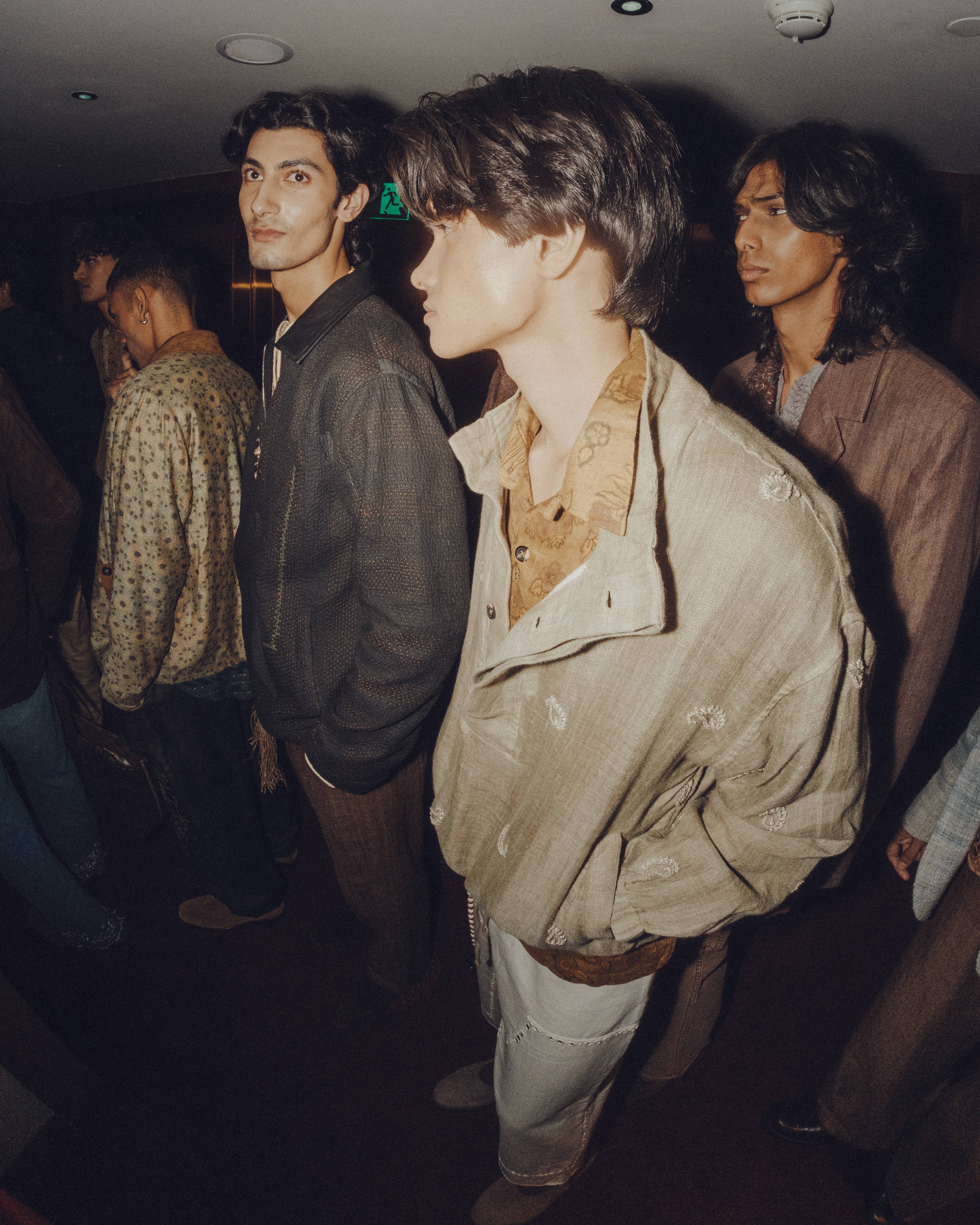
DAY ONE OF Lakmé Fashion Week 2026 marked Kumra’s debut in India, at the Jio World Convention Centre in Bombay. The lead up to the show had people whispering and muttering under their breath. “What’s the big deal with Kartik Research anyway?” we heard, even as they chaotically searched for an entry to his show. Passes were limited and got distributed within minutes of their arrival. It was the show to be at.
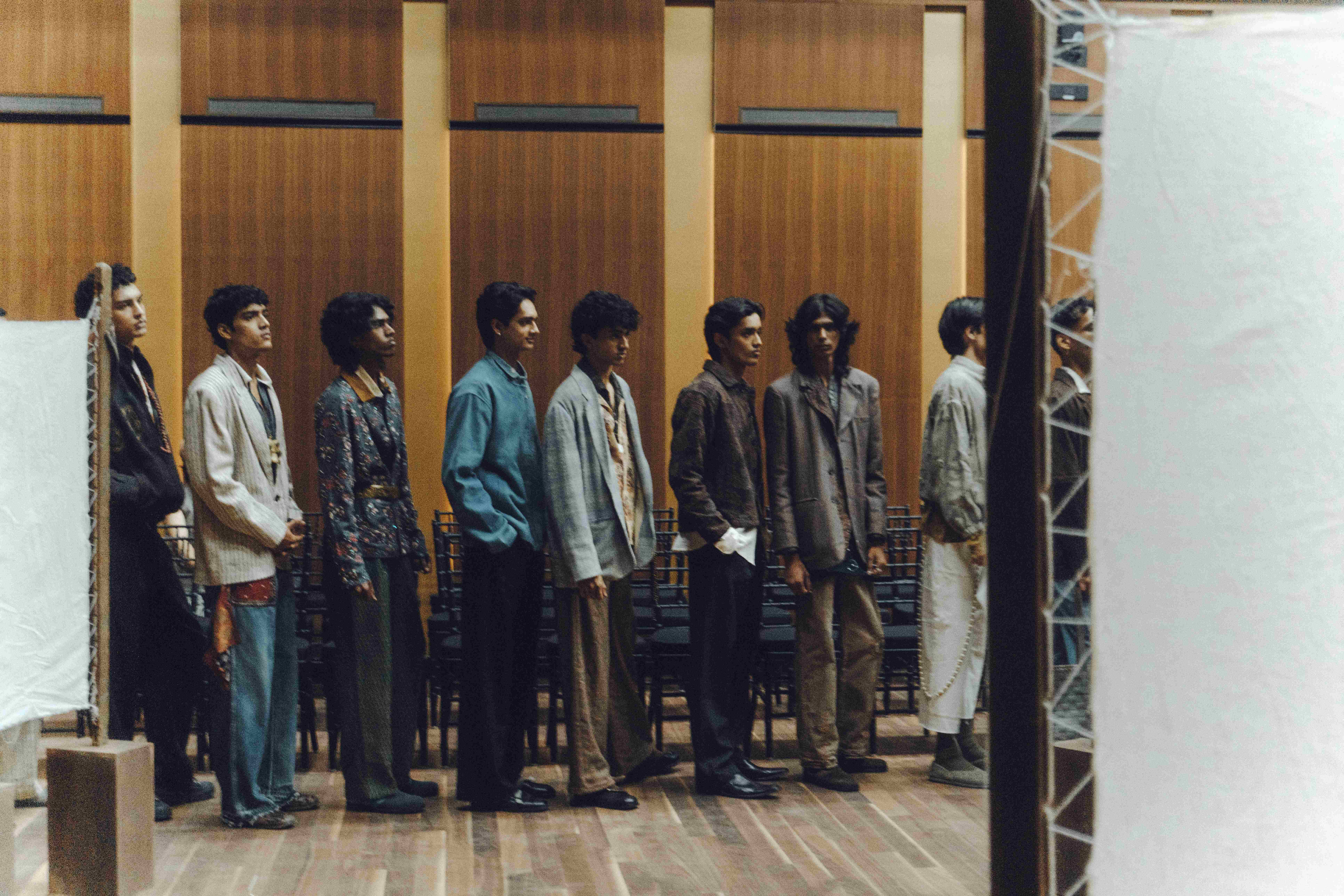
Kumra walked into rehearsals held in The Studio, a theatre in the sprawling NMACC. He wore loose trousers and a shirt thrown over a t-shirt. An amulet hung around his neck. What he showed, despite the hype, were regular clothes–pants, jackets and blazers. A slouchy look. And there, in the middle of all this, Kumra directed the show.
In his LFW collection, he’d modified the suit, not by changing pattern but by adding embellishment. Crisp silhouettes burst with floral embroidery. There was threadwork, where you wouldn’t expect it and embroidery on the collar and shoes. It was Ivy League dressing with a Jack Kerouac irreverence. It made you question: what would happen if J.Crew crossed paths with craft?
The tone he set for his show, he explained, was slow and informal. He directed the models, saying, “Own the room. It is your room.” He showed the upright, taut model how to relax the body. He slumped his arms, relaxed his shoulders. It was a lesson in cool. Sitting on the sidelines, watching the looks, was stylist James Lalthanzuala, but it was Kumra who was in control.
And indeed, if the crowd gathered for Kumra’s first showcase in India was anything to go by, this was the brand adopted by all the cool kids of fashion. Kshitij Kankaria sat in the front row with a hat that read, ‘Make Lady Boy Great Again.’ Next to him was writer Aishwarya Subramanyam. Elsewhere in the front row was Vogue India’s fashion editor, Manglien S. Gangte and photographer Rid Burman. The cool kids sat shoulder to shoulder with the old guard: journalist Namrata Zakaria and veteran insider Sabina Chopra who has mentored generations of new designers and is known internally as Mrs. Lakmé.
The room was packed. Some sat cross-legged on the floor, pressed up against the edges of the runway; the tickets were long gone as bodies jostled for space. Other fashion enthusiasts peered down from the upper level, leaning over the railings to watch. The who’s who of Indian fashion cheered on a boy from Delhi who had, in some sense, made it.
The show answered part of what the big deal with Kartik Research was, but another part lies in what it represents. In a pointed gesture, Kumra’s Paris menswear debut was accompanied by a lookbook titled How to Make It In India. For decades, India supplied luxury fashion with labour, embroidery and textile knowledge, while rarely being credited with authorship. What Kumra is selling is not merely clothes, but access to craft and process, to a system of making that has long existed without recognition.
Still, the unease remains. While the craft narrative is foregrounded, artisans beyond Jaipur, Bhuj and familiar clusters continue to work in conditions that demand deeper scrutiny. Celebration is easy. Analysis is harder. Any real reckoning must not only ask what is being made, but also who benefits from the making. Kumra himself has acknowledged the danger of simulating craft where digital prints replace the block, where the machine nudges out the generational wisdom of handwork.
But does craft stop at block print and Jaipur? Or Kantha and Aari? Craft has become fashionable. The handmade product is proposed as an antidote to rapid consumerism. In an industry obsessed with newness, sales and profit are in opposition to sustainability. Overproduction and the environment sit on opposite sides of the spectrum but occupy the same space in fashion.
In handloom hubs across Bengal, Banaras and Assam, the handmade is under threat. Machines meet numbers no hand can ever meet. Thread is imported from China and sent to handloom weavers in far-flung villages across the country. Yet, we celebrate this great Indian craft moment. The onus of ensuring that craft is protected, that craftspeople live above the poverty line, does not lie solely with Kumra, Kartik Research or any one brand.
The narrative needs to move beyond the poor artisan, just like it has moved towards celebrating an Indian designer.
KUMRA’S GARMENTS ARE textural and worn-in. Romantic notions of craft are his strong suit. They result in a worn down, rugged, coarse and archival look. In a menswear universe concerned with clean lines and classic silhouettes, Kumra makes a case for layering. A brown woollen coat is worn on top of an off-white vest with delicate embroidery that appears to be fading. The garments appear lived-in.
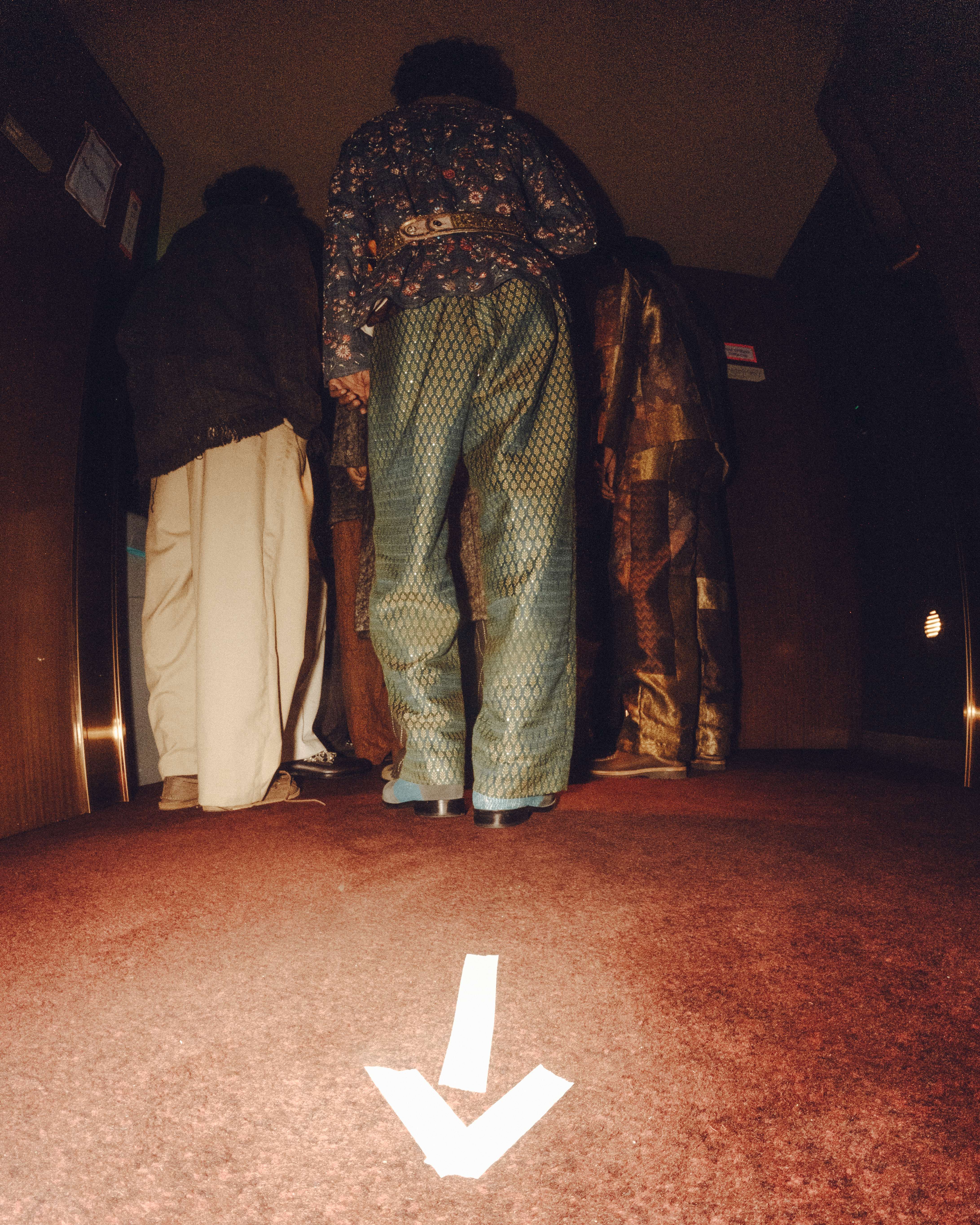
His trousers and footwear speak of travel, from wide straight-cut pants in raw handwoven fabrics, in shades ranging from dusty beige to charcoal, to heavier weaves and frayed edges. This is a nod to the road, to nomadism. Block prints occupy the same space as leather; there are tassels on trousers and embroidery on shoes. Kumra’s aim here is to connect rural craft with urban wearability.
The textiles Kumra develops with artisans across India are raw in texture. Even when lined with bemberg, the textiles retain a certain stiffness. The palette draws from the India of the road, with its dusty and rust-coloured hues, its deep red and tobacco. Paisley recurs on bombers, trousers and linings–a nod to nostalgia. In an India looking to shed its traditional motifs, Kumra recalls these symbols, packaging them for a global market. His stockists include Selfridges, Harrods, and Mr Porter. A jacket retails for $850. If there is such a thing as artisanal prêt from India at Western prices, Kartik Research attempts to make a compelling case.
Marketing is Kumra’s strong suit, where his economics background shines through. Kumra came from nowhere, with no formal fashion education and no industry network, but he had a singular plan—to make it as a designer. He has managed to get in with the right crowds, placing Kartik Research, launched in 2021 during the pandemic, within a global conversation while speaking from India.
Fashion week began with the Boys Club, an offering from four designers. In an age preoccupied with conflict, Sushant Abrol of Countrymade made a case for recognising global tensions. The centrepiece was the arch—India Gate or the Arc de Triomphe—a symbol of recovery after conflict. The motif repeated itself across fabric coloured to mimic ageing stone.
Elsewhere, in Dhruv Vaish’s showcase, the city played a central role. It appeared in maps and textures, with garments functioning as layered ethnographies. Even when the show turned to the traditional, it remained rooted in place: Chennai, with its lineage and memory, was reworked into contemporary silhouettes, notably a red textile bomber jacket by Vivek Karunakaran.
Herein lies the larger shift: menswear in India is undergoing a resurgence. From labels like Mukhtalif to the fine embroidery on linen at Kissa-Goi, there is a growing attempt to articulate what Indian menswear can be beyond costume or imitation. These designers are not simply making clothes. They are announcing a new position, an arrival.
In a label-obsessed world, the modern man is increasingly connected to his garment. A jacket sits between who you are inside and how the world sees you outside. In India, that identity is layered and constructed, shaped by overlapping influences rather than a single origin.
It is through this prism that the panelled silk suit in Kumra’s collection must be viewed. The kantha stitch running through the collection connects geographies linked through trade. Identity in Kumra’s collection is not fixed but assembled. Kumra does not shout Indianness; he suggests it. It is in the embroidery on the hem of a pair of jeans, the tone-on-tone threadwork, and the detail hidden in a lining.
This is what makes the work relevant now. Kumra filters craft through the codes of contemporary menswear: workwear shapes, softened tailoring, clothes that move easily across contexts and continents. The appeal lies in this calibration where tradition is not preserved, it is contextualised.
What is also emerging here is a claim over authorship—over India’s material intelligence. This is a generation of designers asserting agency over their weaves, embroidery, and textile knowledge. They have emerged a few generations after liberalisation and after the creation of institutions like NIFT. Now, they’re stepping onto an international stage with the intent to show how people are connected, how histories persist in cloth.
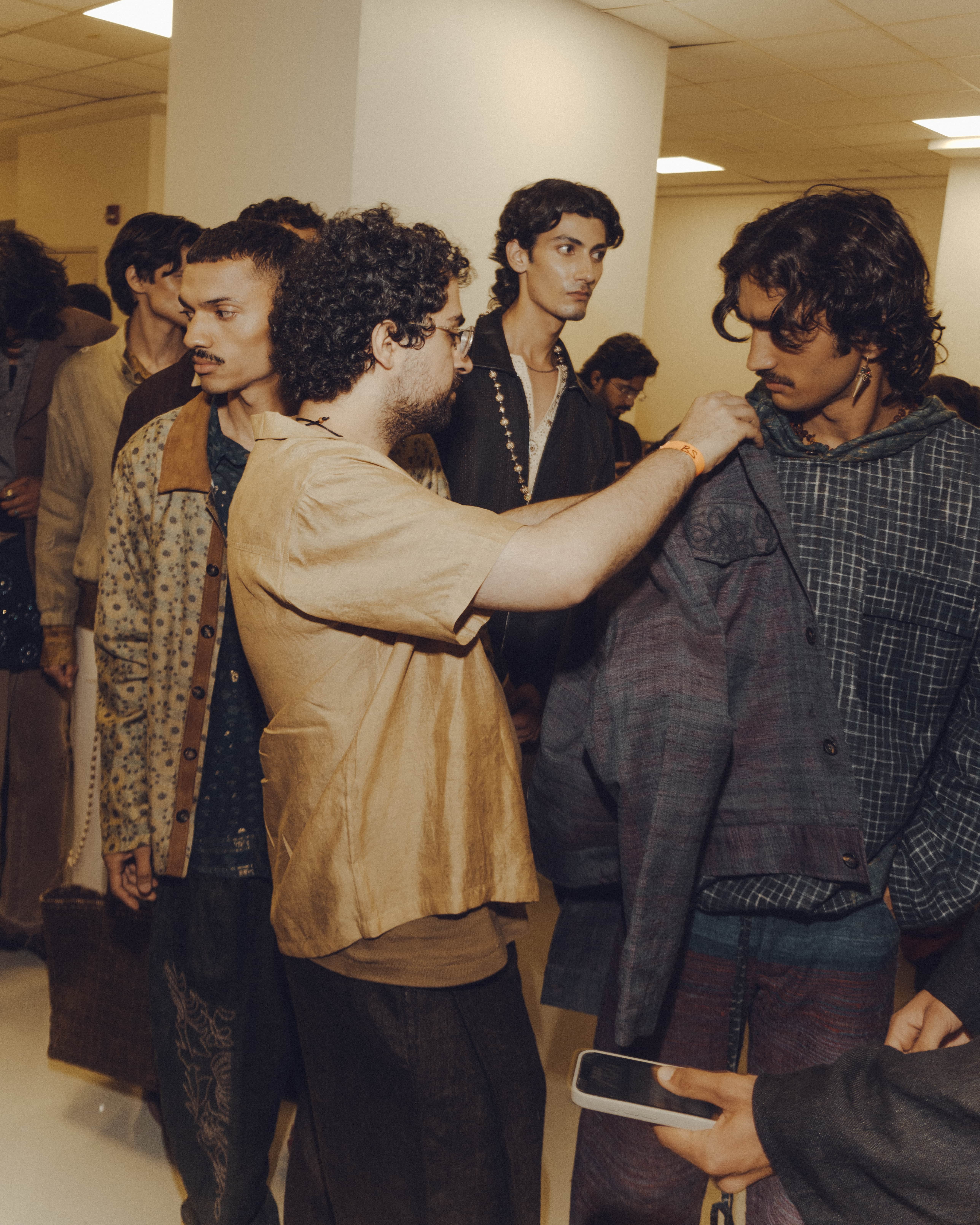
IN A CORNER of the room, under a steady wash of light, Sudan, an independent musician, stood behind the DJ booth, wearing a green diamante shirt with a pink jacket from Kumra’s collection, his guitar cutting through the bass. Moving between the blinds were men in relaxed trousers, softened blazers, and overcoats cut in handwoven fabric, their surfaces marked by different embroidery techniques.
The clothes were not especially novel. The appeal was real, but so was the question of whether the work was being valued for its design, or for the story attached to its making.
That, too, may have been the point.
Herein lies the designer’s challenge. To treat craft as knowledge isn’t simply to use handwoven fabric or cite provenance. It is to reorganise the hierarchy in the making of the garment. In the designers shown on Day One, including Kumra, the hand is not a finishing touch, it is the starting point. From the irregularities on the overcoat, to the logic of the embroidery, the garment holds the memory of construction. The texture seen on the trousers and the undone stitches highlight the process. Craft does not decorate the garment, it structures it.
But the craftsperson continues to languish. In this moment of celebration, we must acknowledge that as per the 4th Handloom Census, 99% of weaving households earned less than 5000 rupees per month. The narrative may have shifted–from the invisible artisan to the visible designer–but the conditions of labour remain harder to resolve.
And maybe that is why the conversation began there, on the lawns of the palace in Khetri, with vendors trying to make sense of it. As they spoke, Sudan was on soundcheck at Magnetic Fields. It felt, in a way, like a return. The big deal with Kartik Research was already in the air.
Photography by: Ashutosh Joshi


