Tejsi Bhai
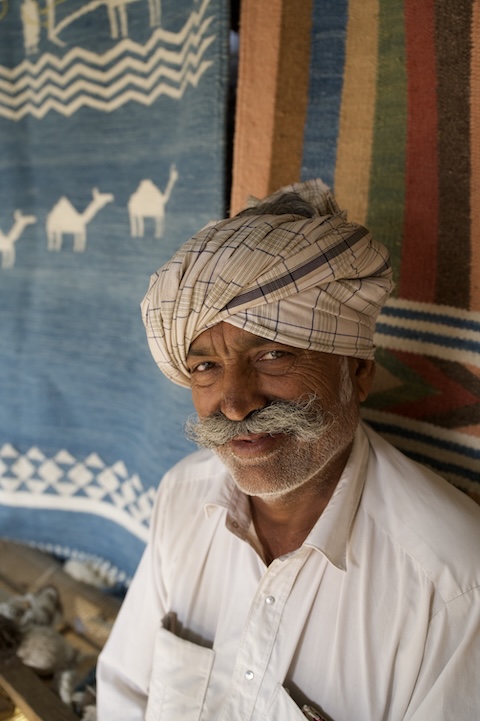
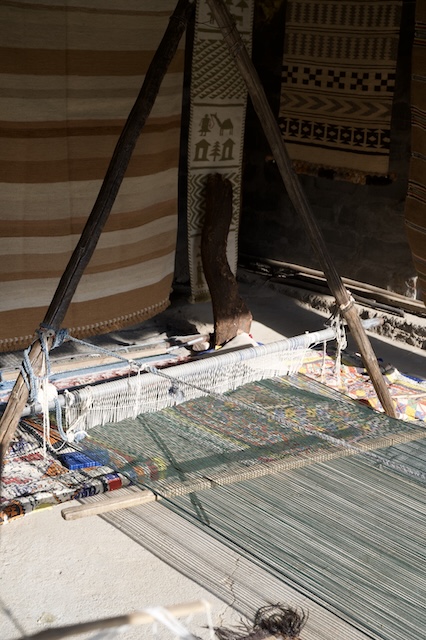
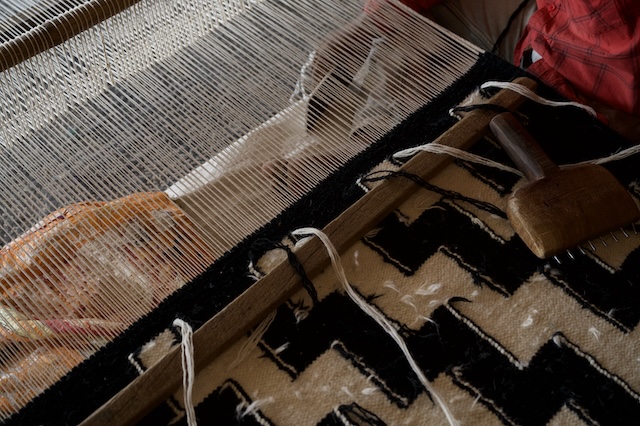
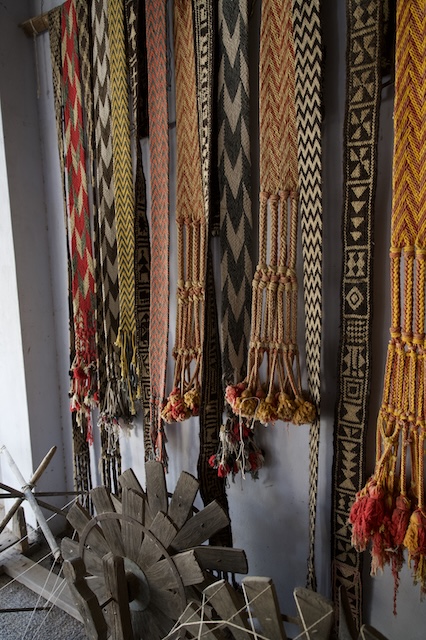
Tejsi Dhana does not hurry the dye pot. He stands in the sun, checks how the light falls, says "dim enough," and feeds the fire with babool wood. Pomegranate skins turn the yarn orange. Green doesn't come from anything in the desert, so the next day he boils the yarn with a little indigo, following recipes his grandfather gave his father. The Dhanas come from Kuran, a village on the Pakistan border, where they were known as the finest bag-weavers around: big, sturdy bags that went into Pakistan empty and came back on camels, full of grain. Camel hair went into the warp and goat hair into the weft, and the wool was spun on a charkha older than Gandhi. After the wars of 1965 and 1971 a road reached Kuran, cars replaced camels, and people forgot the weavers. In 1990 a craft researcher spotted Tejsi and put him in a museum in Ahmedabad, weaving a carpet. It was his first time outside Kuran. In January 2001 the earthquake found him at the loom, finishing an international order. His home and workshop were gone, and the loom was left standing. Today he weaves kharad with his sons and grandchildren, in a craft many families have given up.
Craft category: Kharad weaving
Local name: Kharad
Technique: Wool spun on the charkha, dyed with natural dyes, woven on the handloom
Material(s): Sheep, camel and goat wool, gathered locally
Objects: Wall hangings; dhurries; bags
Signature: Dhurries
Craft status: Stable
GI tag: Yes
Years practising: 47
Generations: More than ten generations, father to son, now to grandchildren
---
Open to visits: Yes
Can teach workshops?: Yes, October to February
Best season to visit: October to February
Workshop space available?: Yes, 5 workstations and 10 looms
Nearest town: Bhuj, 12 km (about 20 minutes)
Nearest airport/ station: Bhuj
---
Awards:
- Crafts Person of the Year (2019), International Crafts Awards
- National Award for Master Craftsman, Ministry of Textiles, Government of India (2005)
- Samat Tejsi (son): National Award for Master Craftsman, Ministry of Textiles, Government of India (2013)
Gender: Man
Organisation:
Age band:
Organisation type: Family workshop
Education:
Craft cluster: Family workshop in Kukma, Kutch
Primary trade: Weaving
Community: Meghwal community
Other trades: No
Key people: Samat Bhai, eldest son (National and State awards); Heera Bhai, second son (State award)
Artisan type: Family workshop
Local events: Diwali, Holi and Ambedkar Jayanti
History: The family has woven kharad for more than ten generations, while many families have given the craft up.
Taught by: Forefathers
Motifs/patterns and meanings: Inspired by nature; the motifs show the way of life of his ancestors
Tools used: Charkha, handloom
Related crafts:
Equipment needed:
Other crafts engaged in:
Youth/ apprentices: The grandchildren are learning
Loom/main tool last serviced:
What makes their work different:
What's hard about it: For him the weaving is the easy part. Finding customers and making what the market wants is the hard part.
No. of looms/workstations: 10 looms, 5 workstations
No. of people working: 40, mostly family
No. of women artisans: 10
Family vs hired: Mostly family
Pieces per month: About 35
Lead time:
Time to make one piece: 8 days to 2 months, depending on the design
Price range: ₹5,000 to ₹1,50,000
How it is sold: Directly and locally; tourists come to buy; no middlemen
Takes commissions: No
Customisation: Yes
Wholesale: No
Export: No
Haats/melas: Surajkund International Crafts Mela; a craft festival in Georgia (2017); a workshop in England (2024)
The Local Holdall
Tejsi Dhana does not hurry the dye pot. He stands in the sun, checks how the light falls, says "dim enough," and feeds the fire with babool wood. Pomegranate skins turn the yarn orange. Green doesn't come from anything in the desert, so the next day he boils the yarn with a little indigo, following recipes his grandfather gave his father. The Dhanas come from Kuran, a village on the Pakistan border, where they were known as the finest bag-weavers around: big, sturdy bags that went into Pakistan empty and came back on camels, full of grain. Camel hair went into the warp and goat hair into the weft, and the wool was spun on a charkha older than Gandhi. After the wars of 1965 and 1971 a road reached Kuran, cars replaced camels, and people forgot the weavers. In 1990 a craft researcher spotted Tejsi and put him in a museum in Ahmedabad, weaving a carpet. It was his first time outside Kuran. In January 2001 the earthquake found him at the loom, finishing an international order. His home and workshop were gone, and the loom was left standing. Today he weaves kharad with his sons and grandchildren, in a craft many families have given up.
Read more