Priti Gavit

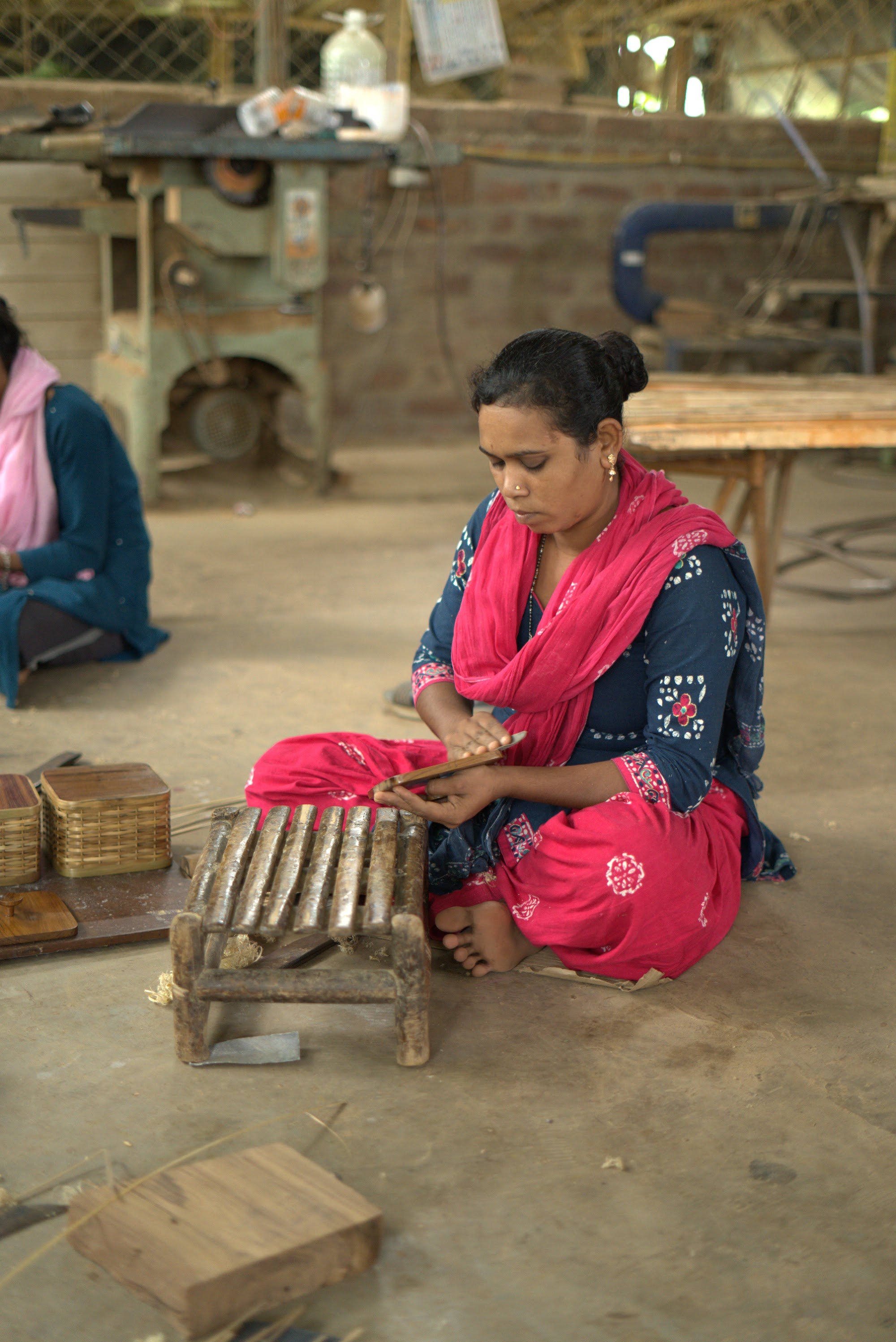
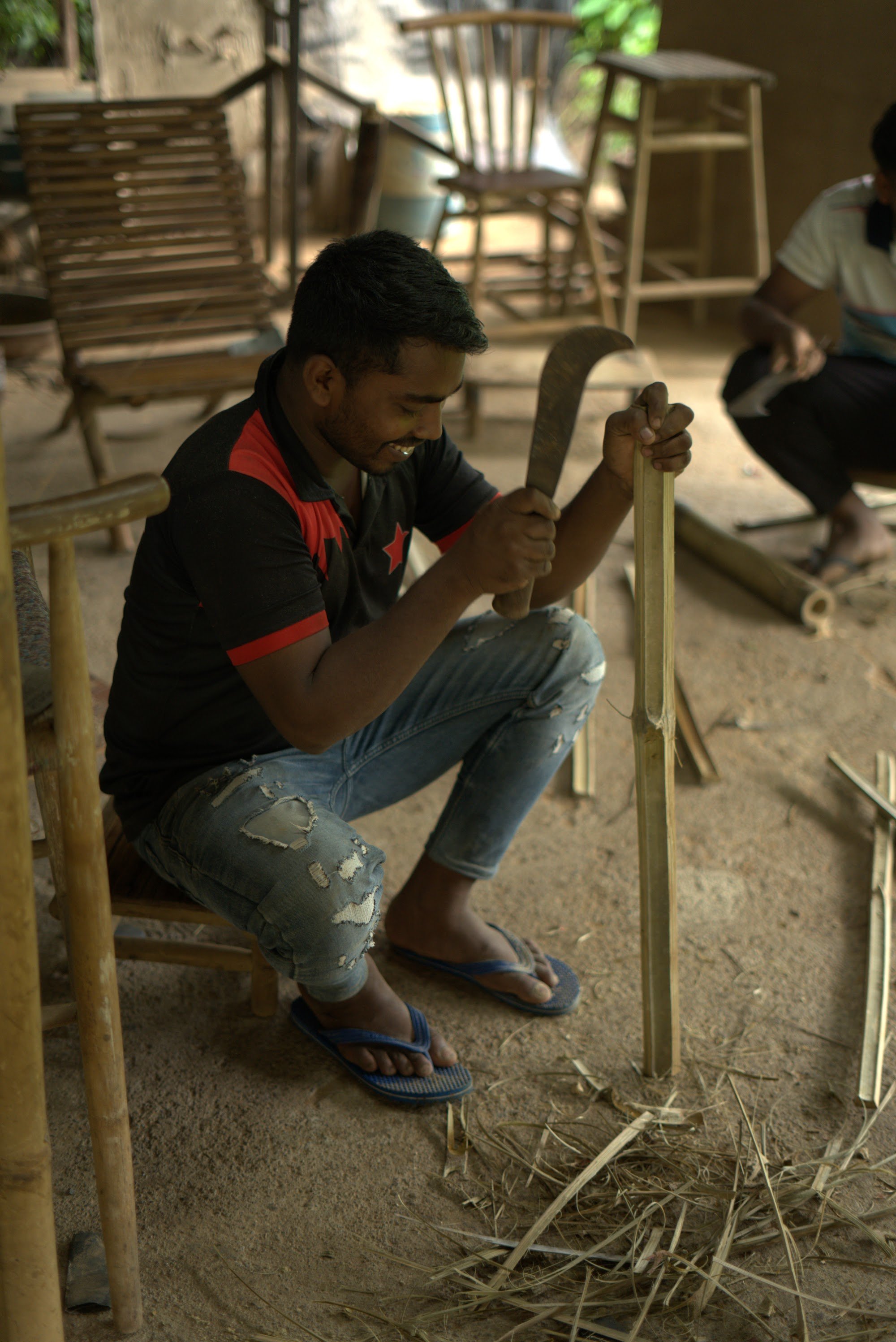
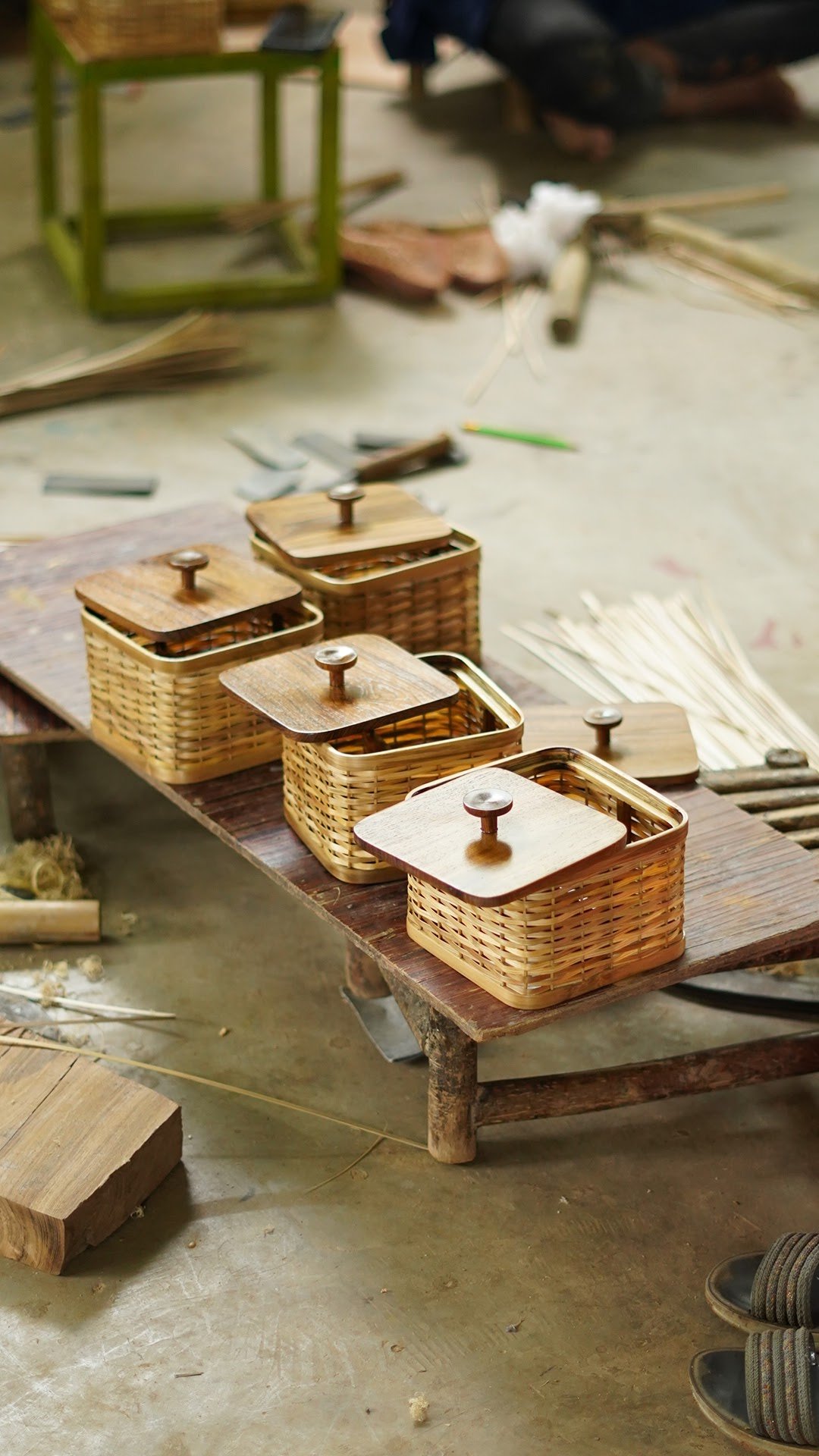
Priti Gavit works in bamboo, a material her Kotwalia community has woven for generations, and she learnt it as a child at her parents’ home in Chhindia. In Chichinagavtha, in Gujarat’s Dang district, she and her husband cut bamboo themselves from the nearby forest every Thursday and Saturday. Her signature is the woven baby stool, along with serving trays, and her range runs from pen stands and cutlery holders to kitchen racks, shelving, wardrobe racks and beds. Twelve years at the Eklavya Foundation’s centre in Waghai taught her furniture-making alongside basketry, and she finishes each piece by drilling, grinding and sanding until the bamboo has no splinters or sharp edges. She uses no metal nails, only dowels she makes from bamboo and glues in place, so the furniture won’t rust or split. Her work has travelled well beyond the Dang, to Aadi Mahotsav at Dilli Haat in New Delhi and to Saras melas and tribal fairs in Surat, Vyara, Gandhinagar and Ahmedabad, where she sells directly to buyers.
Craft category: Bamboo craft and furniture
Local name: Vaaha (bamboo, in Kotwalia); tokar (baskets, in Dangi)
Technique: Splitting bamboo into slats; basket bases with paath and paathi, bodies woven with hilli, rims bound with kaatha; furniture joined with drilling, grinding, bamboo dowels, glue and sanding
Material(s): Local forest bamboo; Govagiri bamboo for furniture frames; Assam bamboo for trays and trivets
Objects: Baskets, baby stools, sitting stools, trays, pen stands, cutlery holders, kitchen racks, shelving, wardrobe racks, beds
Signature: Woven baby stools and serving trays
Craft status: Stable
GI tag: No
Years practising: 10–12
Generations: Multi-generational
---
Open to visits: Yes
Can teach workshops?: Yes, demonstrations, including bamboo harvesting in the forest on Thursdays and Saturdays
Best season to visit: October to February
Workshop space available?: Small space at home; larger workshops through Eklavya Foundation in Waghai
Nearest town: Waghai (7–8 km)
Nearest airport/ station: Surat Airport; Bilimora Junction (narrow-gauge train to Waghai)
---
Awards:
Gender: Woman
Organisation: Saheli Bachat Juth (self-help group); associated artisan at Eklavya Foundation
Age band: 20–30
Organisation type: Self-help group and craft cluster
Education: 10th pass
Craft cluster: Kotwalia Vasahat bamboo cluster, Chichinagavtha, Dang
Primary trade: Bamboo craft and furniture
Community: Kotwalia
Other trades: Seasonal paddy planting
Key people: Priti Salim Gavit; her husband, Salim Gavit; her in-laws; the women of her community
Artisan type: Master artisan
Local events: Forest harvesting days (Thursdays and Saturdays); Aadi Mahotsav; Saras Mela
History: Bamboo basketry is an ancestral craft of the Kotwalia community in southern Gujarat, taught at home from an early age. Priti learned basketry at her parents' home in Chhindia and, over the past twelve years at the Eklavya Foundation, added bamboo furniture and joinery.
Taught by: Her parents, family elders and master trainers at Eklavya Foundation
Motifs/patterns and meanings: Functional geometric basket weaves and minimal lattice work
Tools used: Hand drill, angle grinder, graded sanding paper, koita (hand knife) for splitting bamboo
Related crafts: Cane work, wood carving, natural fibre weaving
Equipment needed: Bamboo joinery bench equipment, splitting tools, a lathe
Other crafts engaged in: None
Youth/ apprentices: Works with family members and the women of her self-help group
Loom/main tool last serviced: Maintained at home; grinder blades and drill bits replaced as needed
What makes their work different: A smooth, splinter-free finish with no sharp edges, and no metal nails: every joint is made with bamboo dowels and glue. Nine standard colours, and custom sizes.
What's hard about it: Splitting raw poles into uniform, very fine strips, and the long hours of sanding and grinding
No. of looms/workstations: A small workspace at home; shared workshop facilities at Waghai
No. of people working: 2 full-time at home (Priti and her husband), 4–6 family members and neighbours at peak; 120 artisan families in the village
No. of women artisans: 10 in her self-help group
Family vs hired: Mostly family, with neighbouring artisans
Pieces per month: Depends on demand; small pieces are made in larger numbers
Lead time: 15 days for 10 sitting stools
Time to make one piece: Small items 1–2 days; stools and furniture take several days of seasoning, joinery and sanding
How it is sold: Exhibition stalls, her village workshop and her self-help group
Takes commissions: Yes
Customisation: Yes (sizes, structures and 9 standard colours)
Wholesale: Yes
Export: No
Middlemen: No
Haats/melas: Aadi Mahotsav at Dilli Haat, New Delhi; Saras melas and tribal fairs in Surat, Vyara, Ahmedabad and Gandhinagar
JoB Shop
Priti Gavit works in bamboo, a material her Kotwalia community has woven for generations, and she learnt it as a child at her parents’ home in Chhindia. In Chichinagavtha, in Gujarat’s Dang district, she and her husband cut bamboo themselves from the nearby forest every Thursday and Saturday. Her signature is the woven baby stool, along with serving trays, and her range runs from pen stands and cutlery holders to kitchen racks, shelving, wardrobe racks and beds. Twelve years at the Eklavya Foundation’s centre in Waghai taught her furniture-making alongside basketry, and she finishes each piece by drilling, grinding and sanding until the bamboo has no splinters or sharp edges. She uses no metal nails, only dowels she makes from bamboo and glues in place, so the furniture won’t rust or split. Her work has travelled well beyond the Dang, to Aadi Mahotsav at Dilli Haat in New Delhi and to Saras melas and tribal fairs in Surat, Vyara, Gandhinagar and Ahmedabad, where she sells directly to buyers.
Read more