Husenbi Jamadar
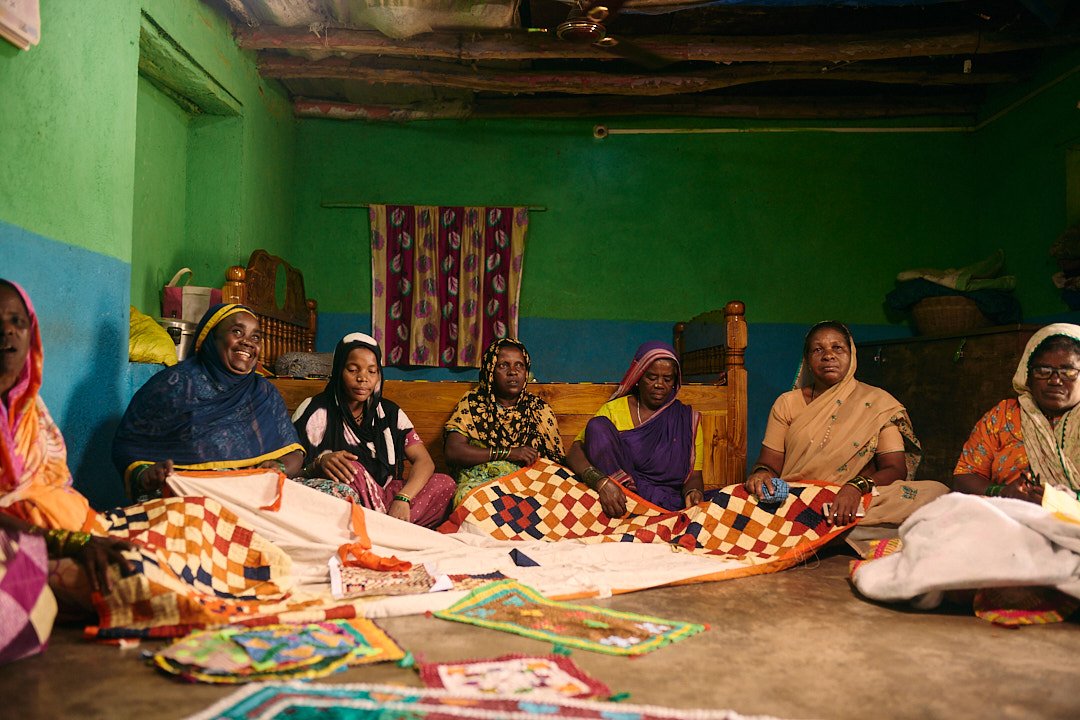
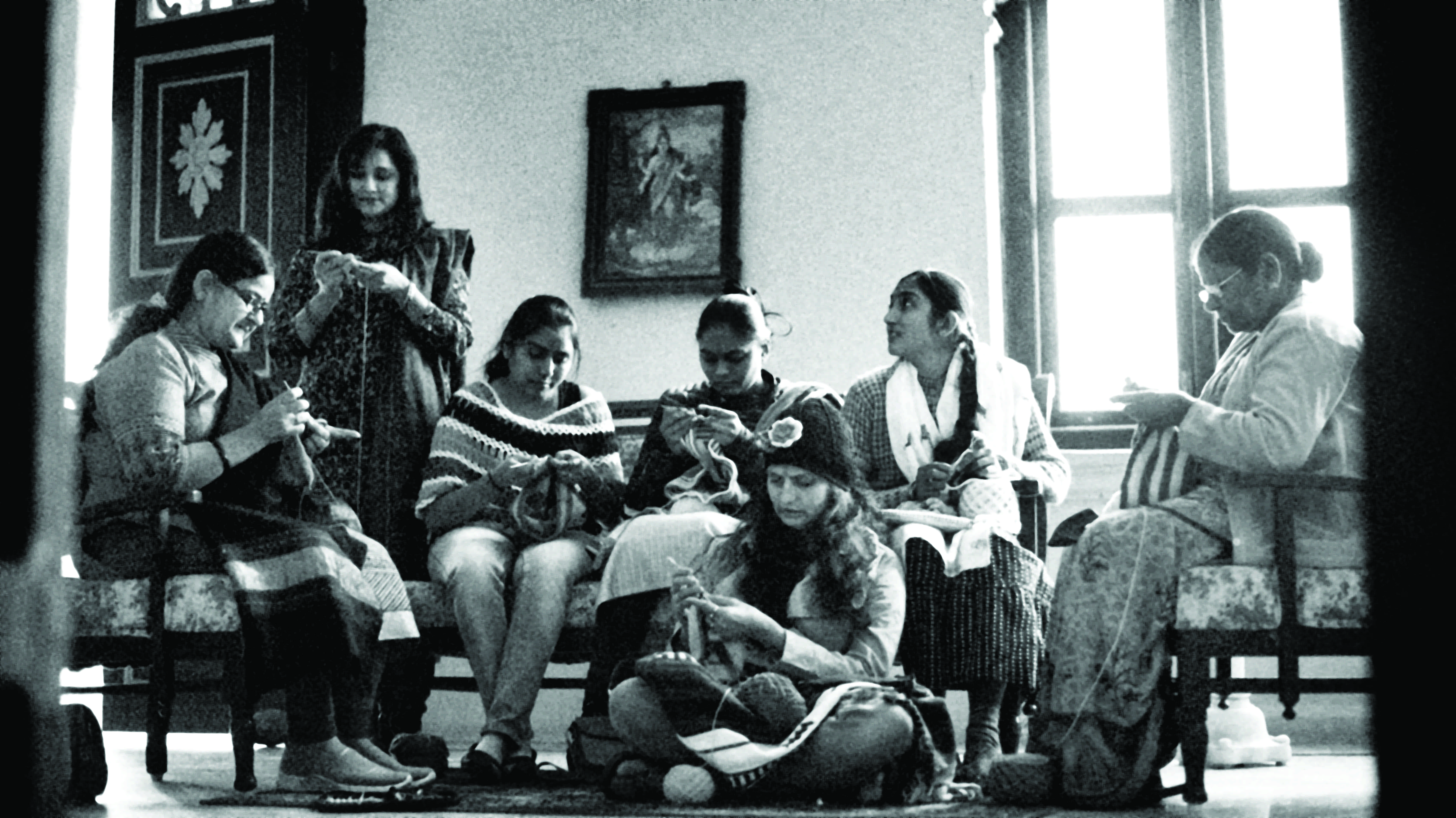
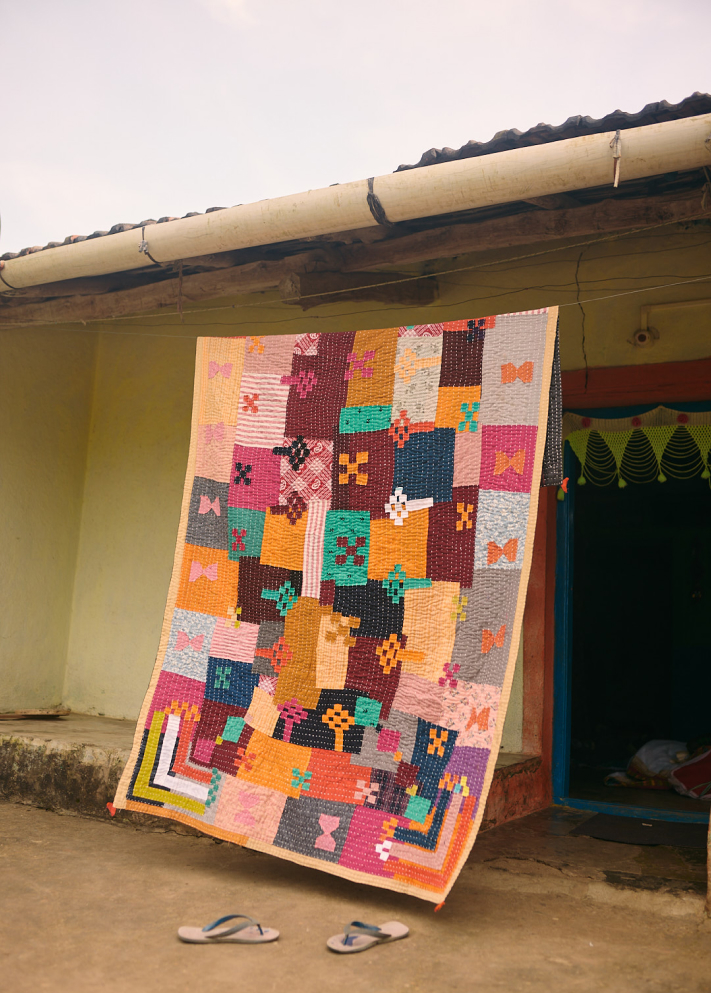
Husnebi Sattar Jamadar is 40 and never went to school. Her mother and aunt made kawandi at home, and she learned by sitting with them. The family made them to sleep under, not to sell. Then a woman from Bengaluru came to the house and asked her to make one, with a good design. Husnebi said they would try. That was ten to twelve years ago. About thirteen women of her family now sew in the hall of her house, each on a different piece. Husnebi makes one double quilt a month, if she can give it her full attention. She says it hurts her back and her eyes. Each quilt is built in layers: a base, padding, and a top fabric in colours and shapes of her own design. Nothing is thrown away. Buyers hear of her from other buyers and call. She sends photos of designs, they choose one, they pay on PhonePe, and she sends the quilt by courier. She has sent quilts abroad. She knows the photos she sends could be passed on and copied. Her ancestors came from East Africa at least five centuries ago, when the Portuguese enslaved them. “I'm Indian,” she told Object's reporters.
Craft category: Quilting / Patchwork
Local name: Kawandi / Kawndi
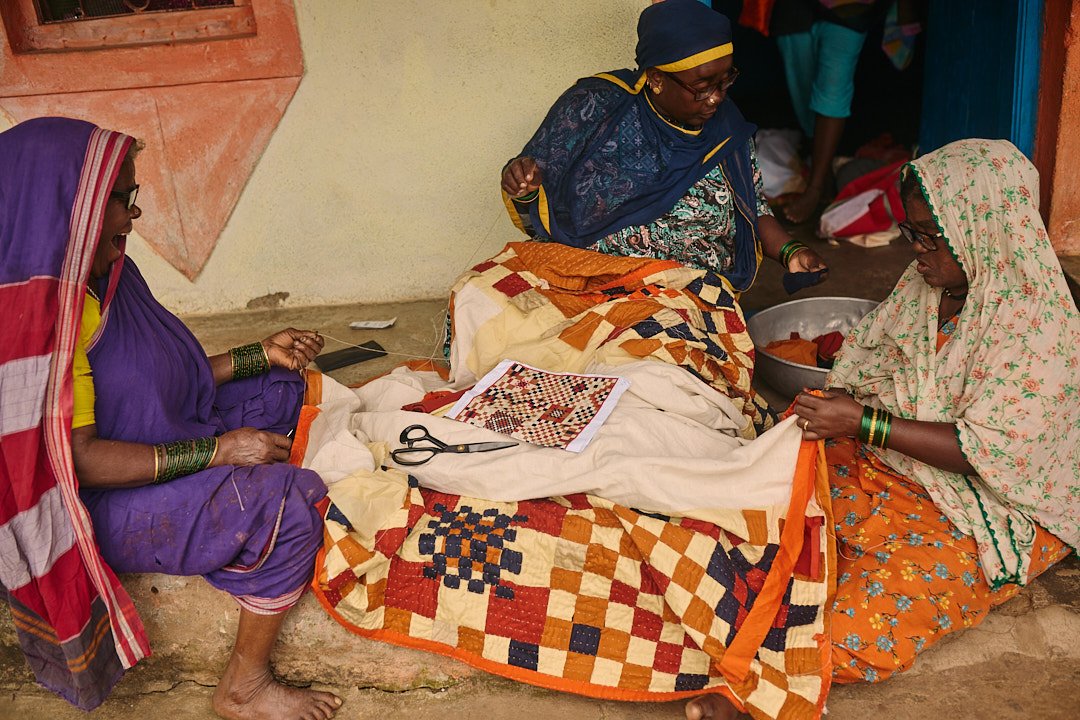
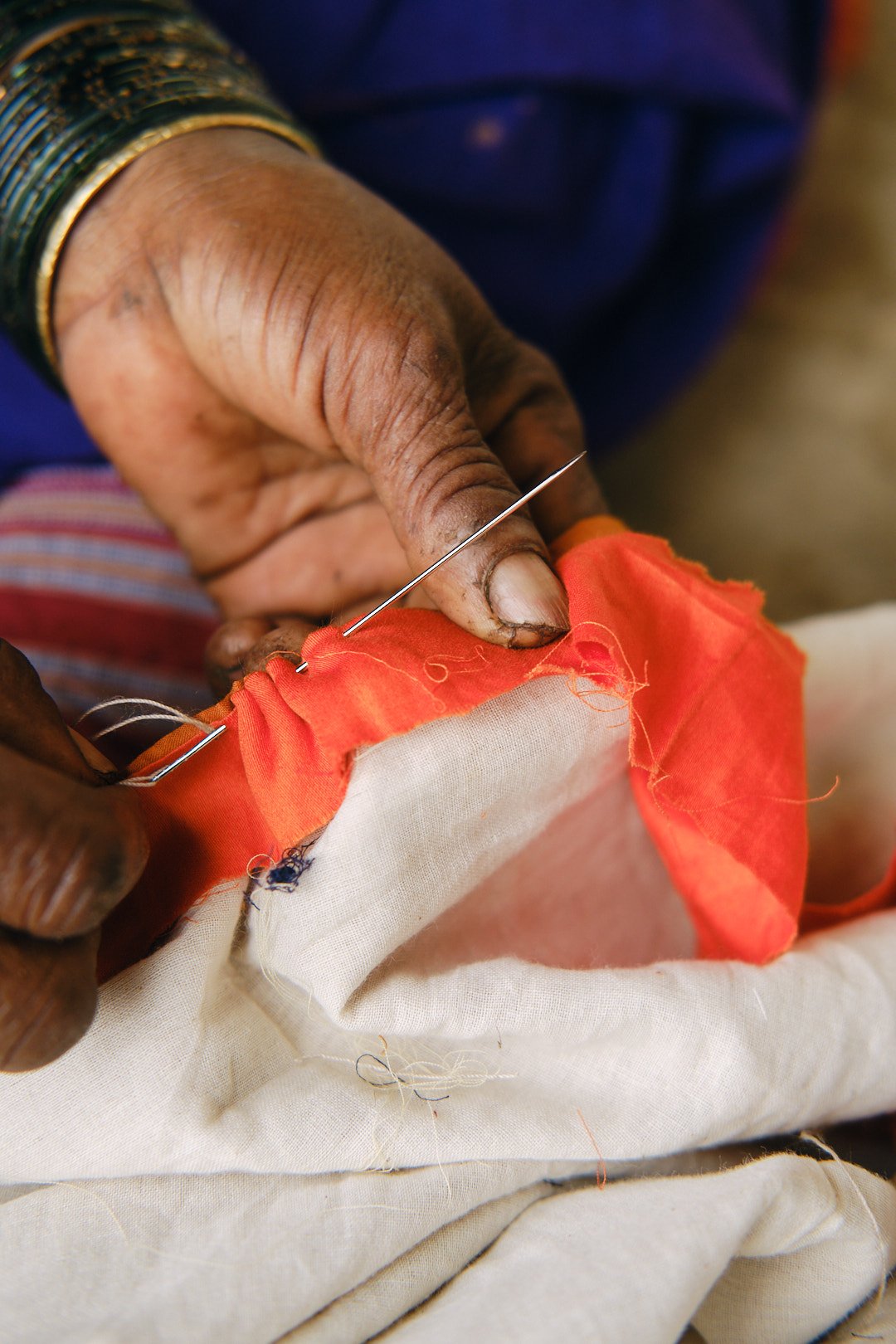
Technique: Basic stitches: running stitch, corner patching, layered edge binding. Ornamentation stitches: applique patches, corner triangular folds (phula), freehand geometric line stitching.
Material(s): Cotton fabric scraps; thread
Objects: Throw quilts; bedspreads; baby quilts
Signature: Custom hand-patched kawandi throw quilt
Craft status: Stable
GI tag: No
Years practising: 10–12 (commercially)
Generations: Multi-generational
---
Open to visits: Yes, any time, with 1 month's notice. Guests can stay and eat at her home. The nearest hotel is 20 km away.
Can teach workshops?: Yes. 2 to 3 people at a time, 1–2 hours a day alongside her work, in Hindi or Kannada. Learners bring their own materials and take their piece home.
Best season to visit: Any time / October to May
Workshop space available?: Yes. The hall inside her home.
Nearest town: Yellapur
Taluk/block: Yellapur
Nearest airport/ station: Hubli Airport / Hubli Junction Railway Station (3 to 4 hours away)
---
Awards: None
Gender: Woman
Organisation: Family collective. No company, NGO or government body.
Age band: 30–45
Organisation type: Informal collective
Education: None
Craft cluster: Her family collective in Tattigera. No other family in the village makes kawandi.
Primary trade: Quilting / Patchwork
Community: Siddi
Other trades: None
Key people: Her mother; aunt (Khala); aunt's daughter; mother-in-law Sehnaz; sister; sister-in-law
Artisan type: Informal collective leader
Local festivals/events: Ramzan, Bakrid
History: An ancestral craft passed down through generations of Siddi women. Kawandi quilts were made at home for the family to sleep under, and the family did not think of selling them until a customer from Bengaluru asked for one. The skill is learned by sitting with the older women and watching.
Taught by: Mother and aunt (Khala)
Motifs/patterns and meanings: Improvised geometric patterns and shapes from her own imagination and her surroundings
Tools used: Sewing needle; thread; scissors
Related crafts: Embroidery; patchwork; applique
Equipment needed: Needles, thread, cotton fabric scraps
Other crafts engaged in: None
Youth/ apprentices: Yes. Her 22-year-old sister is learning and makes quilts to sell.
Loom/main tool last serviced: N/A. Hand-stitched with needles.
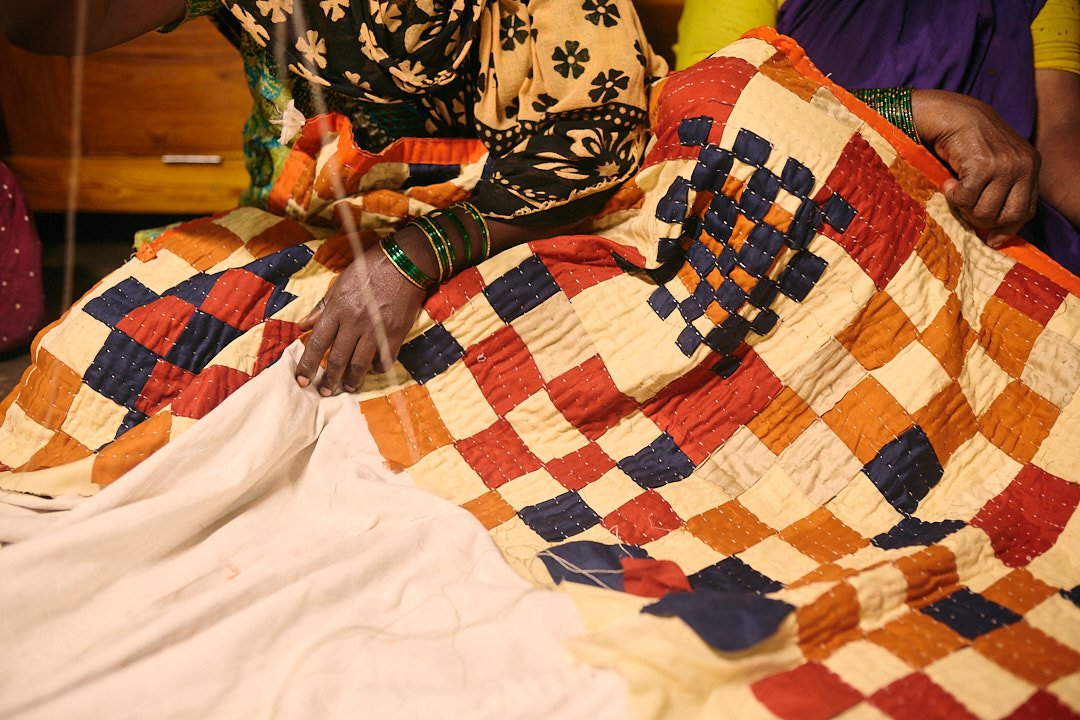
What makes their work different: Entirely handmade, never by machine. Every piece is unique, with custom colours, sizes and designs, and nothing is wasted, because every scrap is reused.
What's hard about it: The sitting. Long hours cause backache and strain her eyes. Buyers also ask for photos of the work, and she knows they could be passed on for others to copy.
No. of looms/workstations: One hall in her house where the women sit and work
No. of people working: About 13 women, all family members
No. of women artisans: 13
Family vs hired: Family
Organisation capacity: 13
Pieces per month: One double quilt per quilter, if she can sit through the month
Lead time: 1 month per double quilt
Time to make one piece: 1 month for a double quilt
Price range: ₹5,000 (baby quilt); ₹10,000 (single quilt); ₹15,000 (double quilt)
Sells directly: Yes
Takes commissions: Yes
Customisation: Yes (colour, size and design)
Wholesale: No
Export: Indirect. She couriers to buyers abroad, who pay the customs charges.
Middlemen: No
Haats/melas: None attended; would go if invited
Where they sell now: From home and by courier. Walk-in buyers, tourists, clients from Bengaluru and the occasional buyer abroad.
A Loom Without A Song
Husnebi Sattar Jamadar is 40 and never went to school. Her mother and aunt made kawandi at home, and she learned by sitting with them. The family made them to sleep under, not to sell. Then a woman from Bengaluru came to the house and asked her to make one, with a good design. Husnebi said they would try. That was ten to twelve years ago. About thirteen women of her family now sew in the hall of her house, each on a different piece. Husnebi makes one double quilt a month, if she can give it her full attention. She says it hurts her back and her eyes. Each quilt is built in layers: a base, padding, and a top fabric in colours and shapes of her own design. Nothing is thrown away. Buyers hear of her from other buyers and call. She sends photos of designs, they choose one, they pay on PhonePe, and she sends the quilt by courier. She has sent quilts abroad. She knows the photos she sends could be passed on and copied. Her ancestors came from East Africa at least five centuries ago, when the Portuguese enslaved them. “I'm Indian,” she told Object's reporters.
Read more