Bidhan Mandal
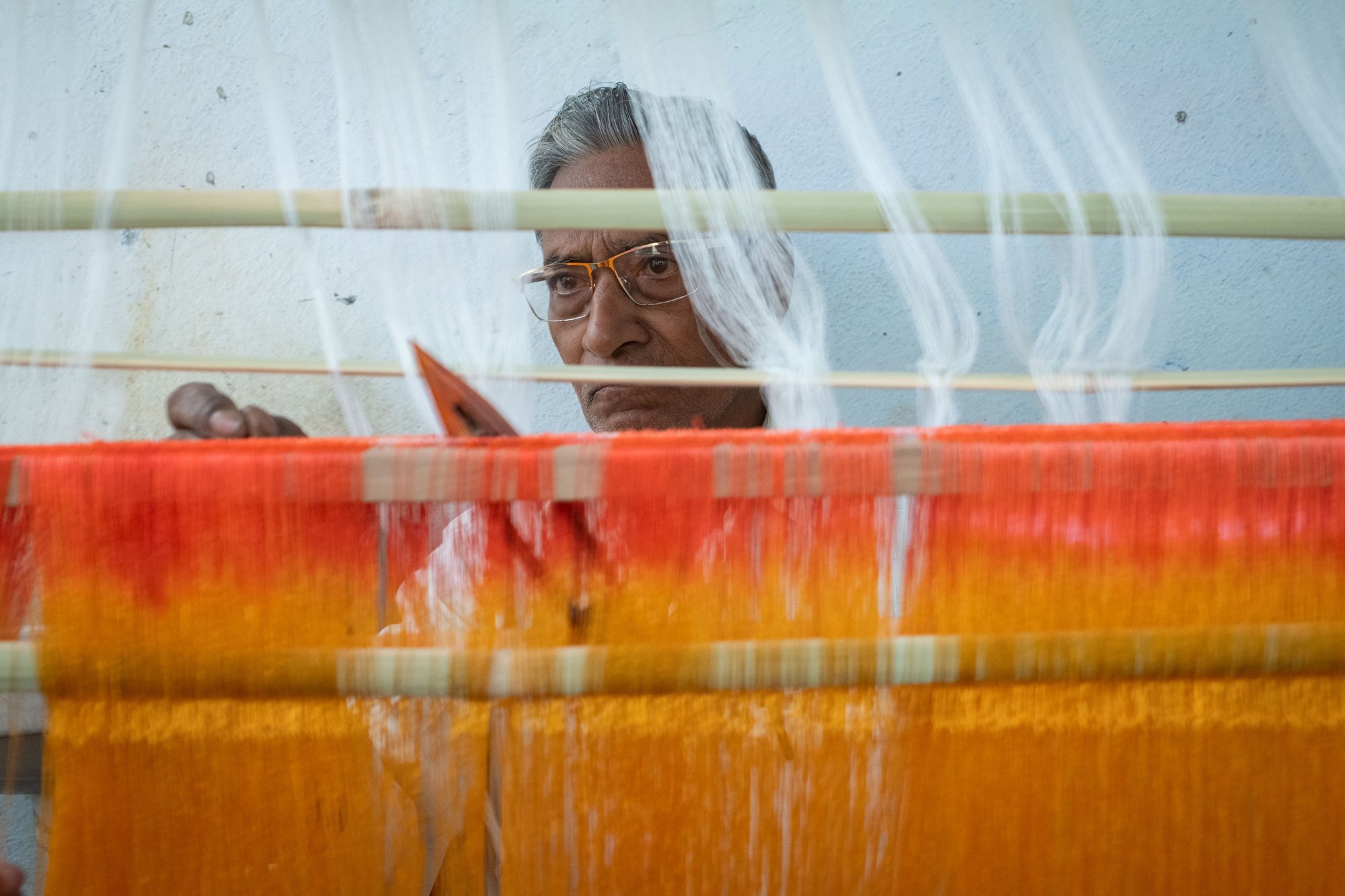
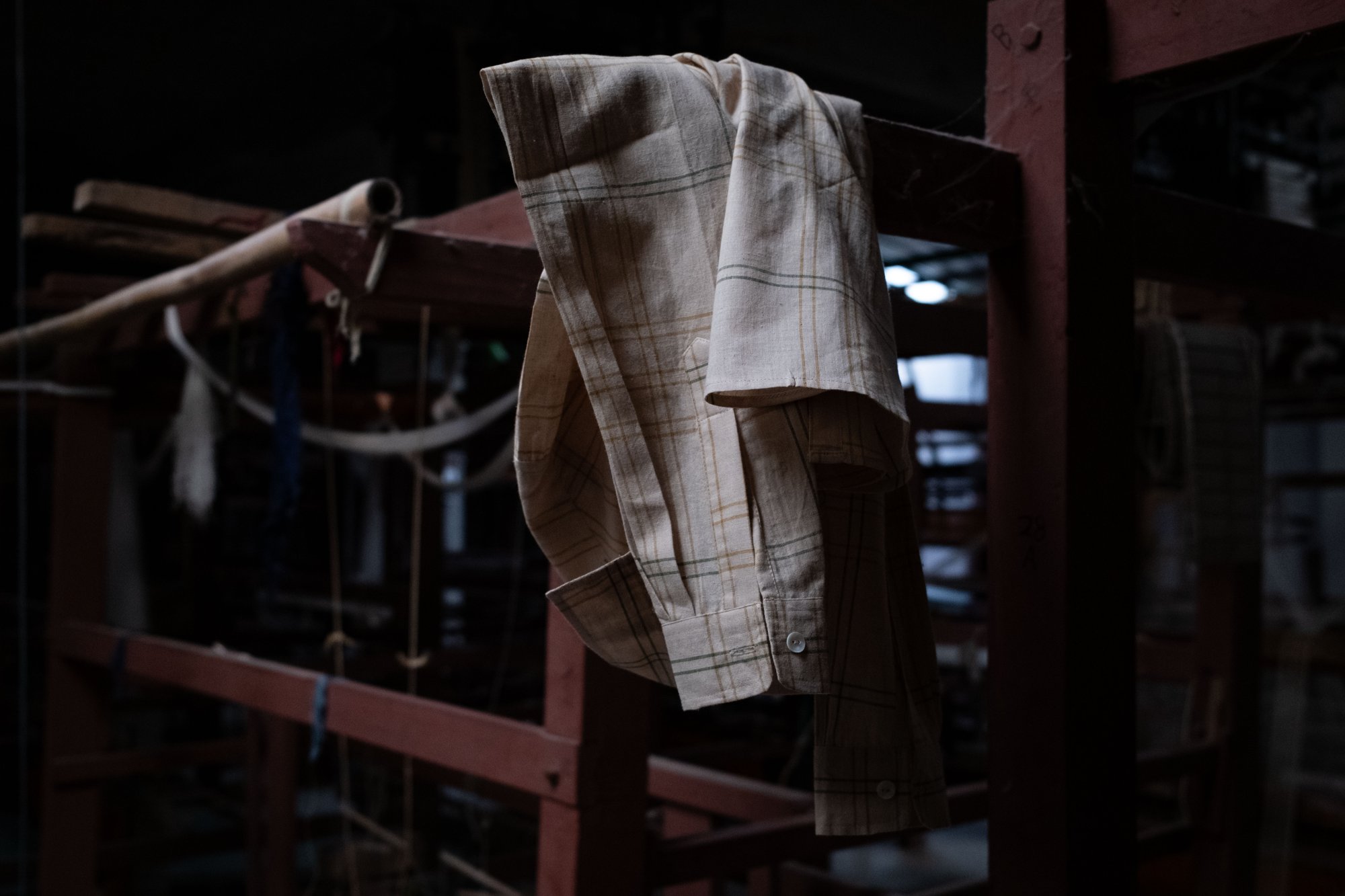
In Basudebpur, Bidhan Chandra Mandal learnt to weave from his grandfather and then his father, on looms that made thick, hard-wearing cloth such as gamchas, towels and bedsheets. He still makes these, but over the years he has expanded his range to sarees, stoles, scarves, curtains and cushion covers, all in pure cotton, with geometric and tribal motifs of his own design that powerlooms cannot replicate. Of the seven looms he works with, two are in the shed attached to his house, where he and his wife work, and five are in a nearby village, run by weavers he hires for his orders. His village once had over 1,000 weavers; now there are around 700, as powerlooms make plain handloom cloth harder to sell and younger people leave for salaried jobs. Bidhan has stayed with the craft, earning a State Award and first prize in a Tantuja design competition, and he now trains other weavers as a Master Trainer at the Weavers’ Service Centre in Kolkata. He has taken his work to Bharat Tex at Bharat Mandapam in New Delhi.
Craft category: Handloom weaving
Local name:
Technique: Handloom weaving; plain weave
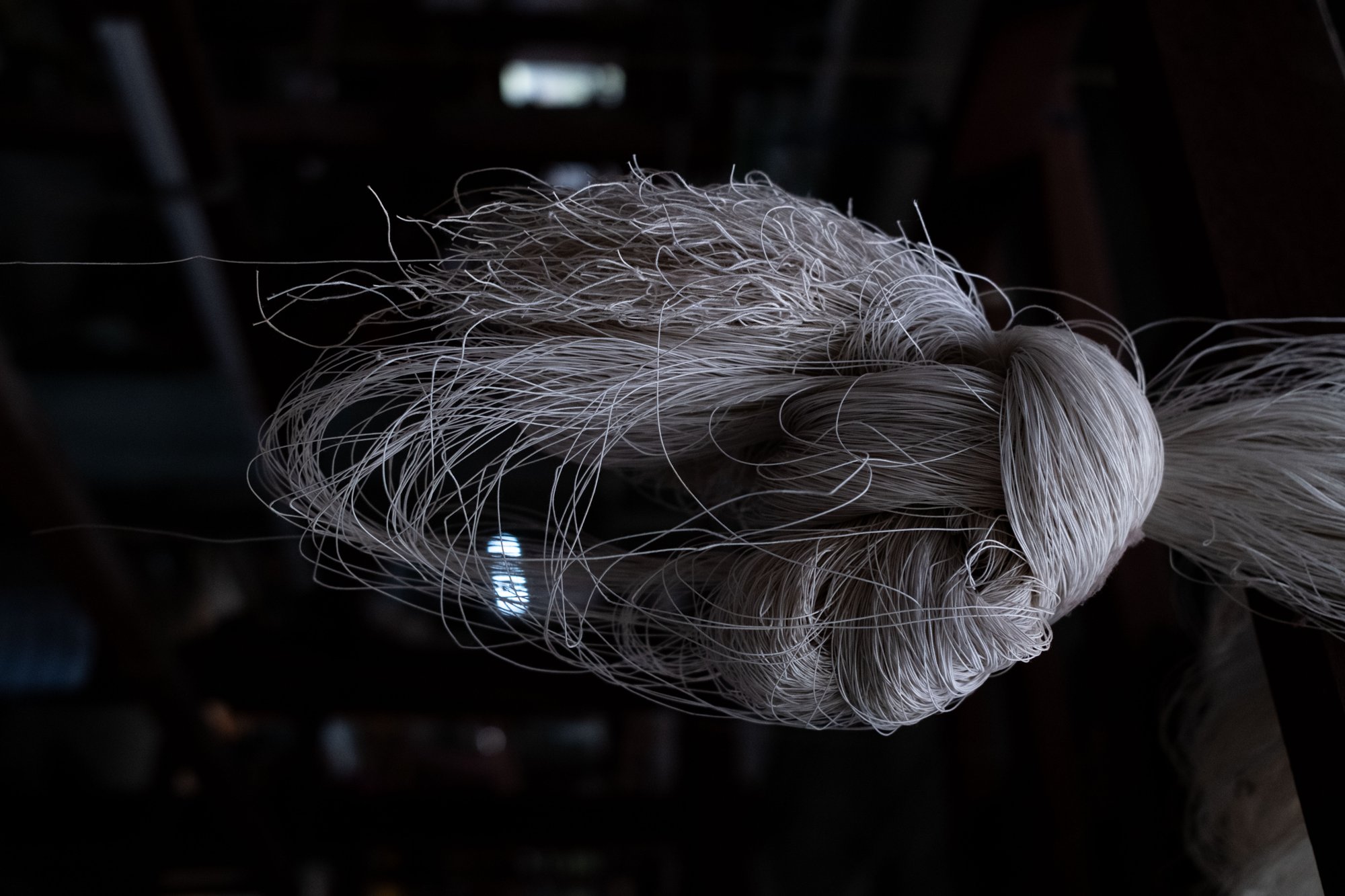
Material(s): 100% cotton yarn
Objects: Sarees, stoles, scarves, towels, gamchas, bedsheets, bed covers, curtains, cushion covers, hand towels, handkerchiefs
Signature: Cotton sarees with tribal and geometric motifs; thick towels, gamchas and bedsheets
Craft status: Stable
GI tag: No
Years practising: 25–26
Generations: Multi-generational
---
Open to visits: Yes
Can teach workshops?: Yes; he is a Master Trainer
Best season to visit: All year
Workshop space available?: Yes, a workshed attached to his house
Nearest town: Digha (about 30 minutes)
Nearest airport/ station: Kharagpur railway station (about 80 km); Kolkata airport (about 160 km)
---
Awards:
- State Award
- 1st Prize, Design Competition – Tantuja
Gender: Man
Organisation: Basudebpur Shilpa Bipanan Tantubay Samabay Samiti Limited
Age band: 45–60
Organisation type: Cooperative society
Education: 12th standard
Craft cluster: Basudebpur handloom cluster (about 700–750 weavers)
Primary trade: Handloom weaving
Community:
Other trades: Master Trainer, Weavers' Service Centre, Kolkata
Key people: Bidhan Chandra Mandal and his wife
Artisan type: Independent artisan and cooperative member
Local events: Maghi Purnima, a ten-day fair at the village temple
History: A household craft practised across generations. Bidhan learned from his grandfather and father, on looms that made thick, everyday cloth: gamchas, bedsheets and towels. The practice has since grown to sarees, stoles and furnishings with tribal and geometric patterns.
Taught by: His grandfather and father, with later government and cooperative training
Motifs/patterns and meanings: Tribal designs and geometric motifs
Tools used: Handloom and loom-setting parts
Related crafts: Dyeing, through the cooperative
Equipment needed: None
Other crafts engaged in: None
Youth/ apprentices: His children are studying; most young people in the village leave weaving for salaried jobs
Loom/main tool last serviced: He maintains and adjusts his looms himself
What makes their work different: His own tribal and geometric designs, which powerlooms cannot copy. His cloth carries the Handloom Mark.
What's hard about it: Cheaper powerloom imitations of plain handloom cloth, and setting up a loom for small runs
No. of looms/workstations: 7 (2 at home, 5 in a nearby village)
No. of people working: 2 full-time at home (Bidhan and his wife), with weavers hired for each order
No. of women artisans: 1 full-time
Family vs hired: Both
Pieces per month: About 30 simple sarees on one loom; intricate designs take longer
Lead time:
Time to make one piece: A plain saree takes a day; patterned sarees take several
Minimum order: 10 sarees, or 50 metres of running fabric
How it is sold: Direct, wholesale, through cooperative societies and the India Handmade portal
Takes commissions: Yes
Customisation: Yes (colours, sizes and pattern placement)
Wholesale: Yes
Export: No
Middlemen: No
Haats/melas: The weekly village haat; Bharat Tex at Bharat Mandapam, New Delhi
Into The Fray
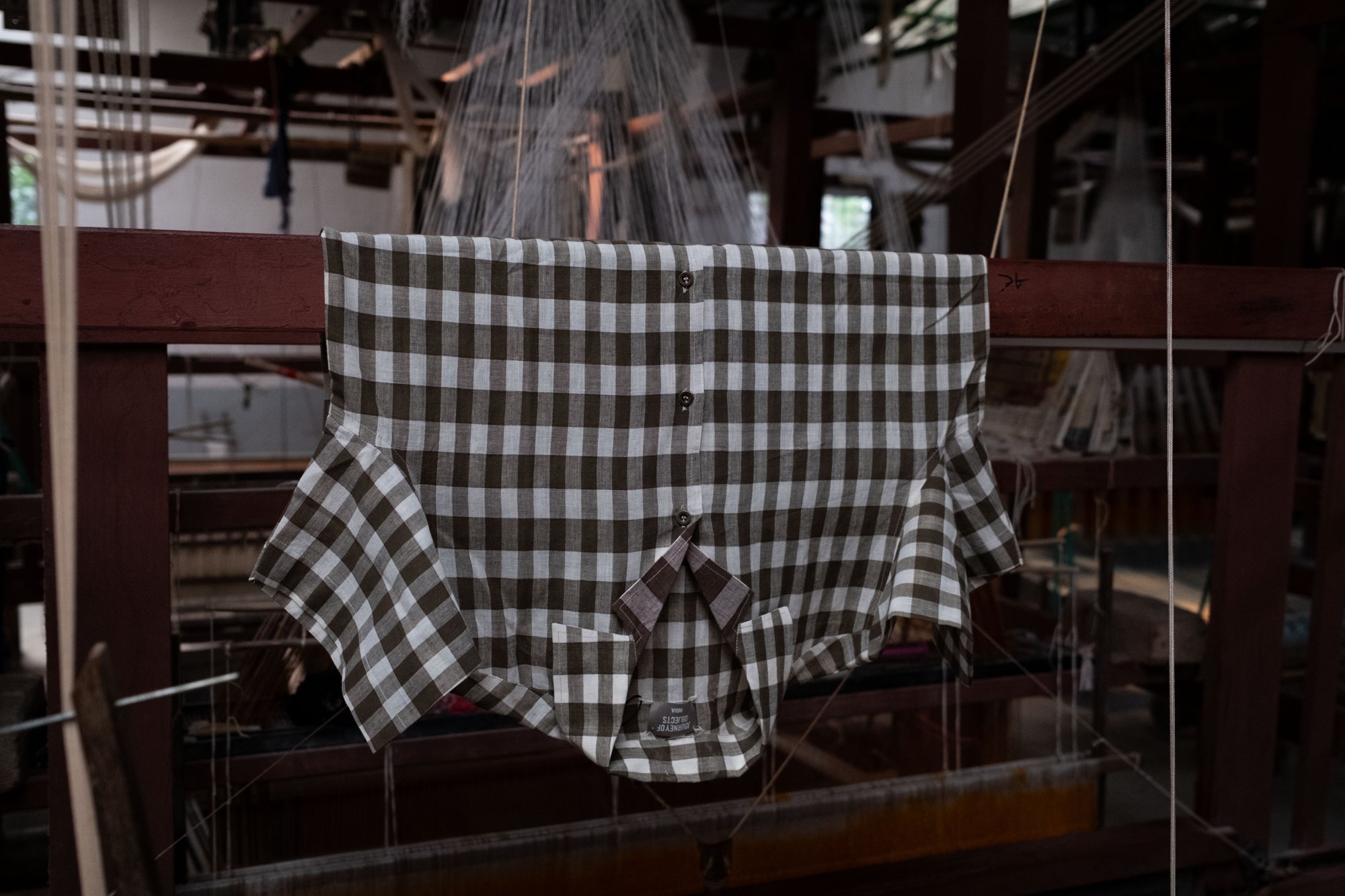
In Basudebpur, Bidhan Chandra Mandal learnt to weave from his grandfather and then his father, on looms that made thick, hard-wearing cloth such as gamchas, towels and bedsheets. He still makes these, but over the years he has expanded his range to sarees, stoles, scarves, curtains and cushion covers, all in pure cotton, with geometric and tribal motifs of his own design that powerlooms cannot replicate. Of the seven looms he works with, two are in the shed attached to his house, where he and his wife work, and five are in a nearby village, run by weavers he hires for his orders. His village once had over 1,000 weavers; now there are around 700, as powerlooms make plain handloom cloth harder to sell and younger people leave for salaried jobs. Bidhan has stayed with the craft, earning a State Award and first prize in a Tantuja design competition, and he now trains other weavers as a Master Trainer at the Weavers’ Service Centre in Kolkata. He has taken his work to Bharat Tex at Bharat Mandapam in New Delhi.
Read more