Arun Khatua
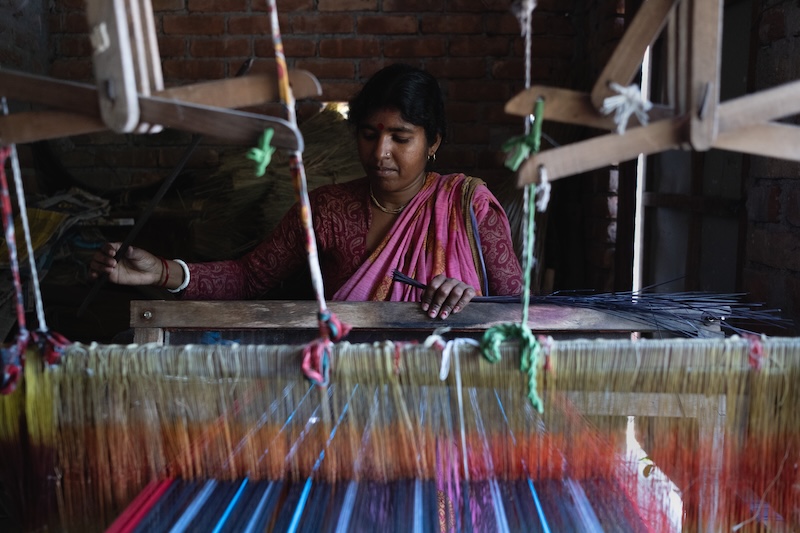
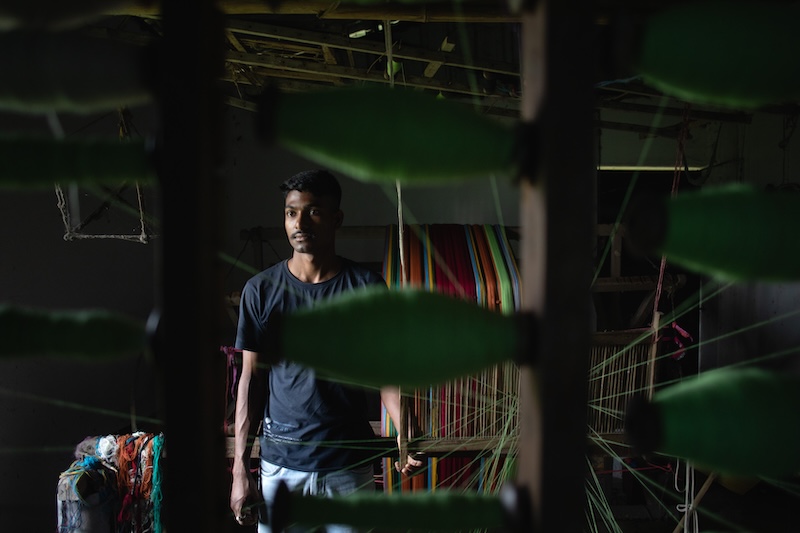
Arun Khatua inherited his craft and then went to school for it. Mat weaving came down to him through three generations of his family in Maligram, in West Bengal’s Paschim Medinipur, and in the early nineties he added formal training in textile design at a government weaving centre. What he took from it was an eye for what people want in their homes. Having watched how richly Calcutta’s households were furnished, he became devoted to what he calls “home based products”, and his Society now turns out the whole domestic catalogue in madur kathi, the local grass. Its mats, cushion mats, folding mats and mattresses sit alongside pankhas, door curtains, sofa covers, laptop bags, mobile covers and beach bags, a range that runs from the floor to the laptop. He founded the Belun Hasta Shilpa Kuti Society in 2010 as an organisation open to any artisan who wanted to join. Seventy-five women now weave there under four supervisors, and they have found their voice in village matters. He sells through Kolkata’s exporters and takes his work to the city’s exhibitions, where he goes with his son to show it and to study what other artisans are making.
Craft category: Mat weaving
Local name: Madur kathi; masland (the fine mat)
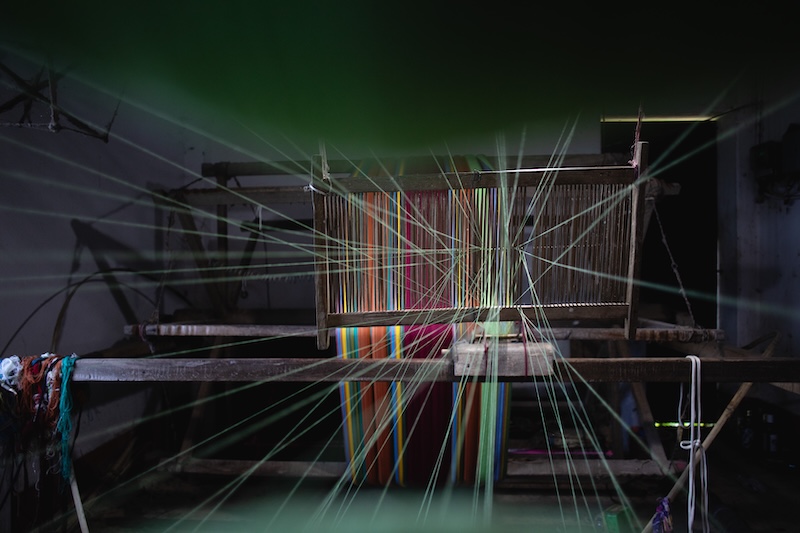
Technique: The thread is dyed naturally and rolled on the charkha. After binding it goes to the handloom, where it is woven with madur kathi (local grass) into a roll, and the final product is made from the roll.
Material(s): Madur kathi (local grass) from Maligram; natural
Objects: Mattresses; dining mats; folding mats; cushion mats; door curtains; bags; mobile covers; boxes; laptop bags; sofa covers
Signature: Cushion mat
Craft status: Stable
GI tag: Yes
Years practising: 35
Generations: Third generation; his two sons work with him
---
Open to visits: Yes, booked through Object
Can teach workshops?:
Best season to visit: December
Workshop space available?:
Nearest town: Kolkata, about 3 hours away
Taluk/block: Maligram
Nearest airport/ station: Kolkata, about 3 hours
On the route: Pingla; sholapith; Purba Medinipur; brass and bronze utensils
---
Awards:
Gender: Man
Organisation: Belun Hasta Shilpa Kuthi Society
Age band: 45–60
Organisation type: Society, open to any artisan who wants to join
Education: 10th grade
Craft cluster: Belun Hasta Shilpa Kuthi Society, Maligram
Primary trade: Mat weaving
Community: Maligram villagers
Other trades:
Key people: His sons Arijit and Subojit Khatwa; four supervisors
Artisan type: Collective
Local festivals/events: Durga Puja, Diwali, Holi
History: A craft about 200 years old in the area. Arun learned it from his forefathers and started at 25; he is the third generation of his family in it.
Taught by: Forefathers
Motifs/patterns and meanings: Woven in on the handloom
Tools used: Charkha; bobbin; handloom; sewing machine
Related crafts: Other mat products; pakha (hand fans)
Equipment needed:
Other crafts engaged in:
Youth/ apprentices: Yes, his sons Arijit and Subojit
Loom/main tool last serviced: At regular intervals
What makes their work different: Handmade from natural materials.
What's hard about it: Making masland, the fine art mat.
No. of looms/workstations: 8 to 10
No. of people working: Arun, his two sons, 4 supervisors and 75 women artisans
No. of women artisans: 75, in a self-help group with its own head
Family vs hired: Both
Organisation capacity: 75
Services offered: Weaving, tailoring, stuffing
Pieces per month: 1,000
Lead time: 1 month
Time to make one piece: 2 pieces a day
Price range: ₹500 to ₹5,000
Sells directly: No; through wholesale, export and exhibitions
Takes commissions: Yes
Wholesale: Yes
Export: Yes
Middlemen: No
Where they sell now: Locally, at exhibitions and in Kolkata

A Mat Weaving Tradition Lives On In Bengal
Arun Khatua inherited his craft and then went to school for it. Mat weaving came down to him through three generations of his family in Maligram, in West Bengal’s Paschim Medinipur, and in the early nineties he added formal training in textile design at a government weaving centre. What he took from it was an eye for what people want in their homes. Having watched how richly Calcutta’s households were furnished, he became devoted to what he calls “home based products”, and his Society now turns out the whole domestic catalogue in madur kathi, the local grass. Its mats, cushion mats, folding mats and mattresses sit alongside pankhas, door curtains, sofa covers, laptop bags, mobile covers and beach bags, a range that runs from the floor to the laptop. He founded the Belun Hasta Shilpa Kuti Society in 2010 as an organisation open to any artisan who wanted to join. Seventy-five women now weave there under four supervisors, and they have found their voice in village matters. He sells through Kolkata’s exporters and takes his work to the city’s exhibitions, where he goes with his son to show it and to study what other artisans are making.
Read more